If you have ever told yourself, “Today I’m going to do better,” only to end up pulled off track again by cravings, hunger, or that constant mental chatter around food…
you are not alone.
And more importantly:
you may not be dealing with a simple willpower problem.
Because for a lot of adults, the struggle is not just about motivation.
It is not just about discipline.
And it is not always about not knowing what to do.
Most people already know the basics.
Eat less junk.
Cut back on sugar.
Stop late-night snacking.
Move more.
Be consistent.
That advice is everywhere.
And yet many people still feel like healthy eating is harder for them than it “should” be.
They do well all day… then suddenly want something sweet at night.
They try to stay in control… then feel hungry again too soon.
They make progress… then lose momentum when their appetite, energy, or eating patterns
seem to turn against them.
And after a while, that starts to wear on you.
Not just physically.
Mentally.
Because there is a huge difference between:
“I know what to do.”
and
“It actually feels manageable to keep doing it.”
That gap is where so many people live.
They are not clueless.
They are not lazy.
They are not unserious.
They are just stuck in a pattern where healthy choices seem to require more effort than they should.
And that is exactly why more people have started asking a different question:
What if the real issue is not just self-control… but what is happening underneath it?
That question is one big reason berberine has moved from a niche ingredient into a much bigger conversation.
Not because it is magic.
Not because it is some overnight shortcut.
But because more people are starting to wonder whether cravings, appetite, blood sugar
patterns, and weight-management struggles may be more connected than they realized.
And if that is true…
then “just try harder” may never have been the full answer in the first place.
The frustrating part almost nobody talks about honestly
There is a certain kind of frustration that comes from feeling like your body does not cooperate with your effort.
It is different from laziness.
Different from not caring.
Different from “falling off” because you were never serious.
It is the frustration of feeling like you are trying, but still dealing with things that seem bigger than simple intention:
- appetite that feels louder than your willpower
- cravings that show up at the worst times
- constant thoughts about snacks or sweets
- energy dips that make good decisions harder
- the feeling that other people can “just eat normally,” while you seem to have to negotiate with food all day
That is what makes this problem emotional.
It is not only about the number on the scale.
It is about the feeling that healthy choices take too much effort.
It is about being tired of starting over.
It is about wondering why something so “simple” feels so difficult in real life.
And that is usually where shame starts creeping in.
People begin telling themselves:
- “Maybe I’m just weak.”
- “Maybe I have no discipline.”
- “Maybe I always mess this up.”
- “Maybe this is just how I am.”
But that explanation is often too shallow.
Because sometimes the problem is not that you do not care enough.
Sometimes the problem is that your appetite, cravings, and post-meal patterns are creating more resistance than most advice accounts for.
In other words:
you may not just be fighting calories.
You may be fighting metabolic friction.
What “metabolic friction” really means
That phrase sounds technical, but the idea is simple.
Some people are trying to improve their eating habits while their internal signals are relatively calm.
Other people are trying to improve their eating habits while their internal signals seem to keep turning the difficulty up.
That second group often experiences things like:
- getting hungry again not long after eating
- feeling more pulled toward sweets or refined carbs
- feeling mentally preoccupied with food
- feeling like one craving can throw off an entire day
- feeling stuck in a pattern where progress is slow and easy to undo
That does not mean calories do not matter.
It does not mean habits do not matter.
And it does not mean any supplement replaces real behavior.
What it does mean is that the eating experience itself may be influenced by more than just intention.
Appetite.
Cravings.
Blood sugar steadiness.
Satiety.
Post-meal energy.
The “volume” of food noise in your head.
Those things matter more than many people realize.
And once you see that, a lot of the frustration starts to make sense.
Because if your internal signals are creating more friction than they should…
then even good advice can feel strangely hard to follow.
That is the real shift in perspective.
Not:
“I need more discipline.”
But:
“Maybe I’ve been trying to force consistency while something underneath keeps making consistency harder.”
And once a person sees that possibility clearly, they become open to a much better question:
If the struggle is not just willpower… what kind of support actually makes sense?
A more useful question
Instead of asking, “Why can’t I just be more disciplined?” a better question may be: “What might be making consistency feel harder than it should?”
Why berberine started getting so much attention
For a while, berberine mostly lived in the background — in conversations about blood sugar, insulin sensitivity, and metabolic health.
Then the conversation widened.
More people began looking into:
- appetite control
- cravings support
- insulin-related issues
- blood sugar balance
- metabolic health
- and natural options that might support some of the same broad concerns people associate with the current GLP-1 conversation
That is when berberine moved out of the niche world and into mainstream curiosity.
Suddenly, people who had barely heard of it were asking:
- What is berberine?
- What does it actually do?
- Is it legit?
- Is it just hype?
- Can it really help with appetite or cravings?
- Is it only about blood sugar?
- Is this just another “natural Ozempic” angle?
- Or is there actually something here?
Those are fair questions.
there is something real here — but it needs to be explained carefully.
Because berberine is not the kind of ingredient that should be sold with fantasy language.
It is more interesting than that.
The problem is that once an ingredient starts gaining attention, the market usually does the same thing it always does:
it gets loud.
Very loud.
Suddenly every product starts making some version of the same promise:
- better metabolism
- stronger fat burning
- appetite shutdown
- food-noise control
- miracle support
- “natural GLP-1” benefits
- and every other category buzzword that happens to be converting this month
That is exactly where smart buyers start pulling back.
Not because they are closed-minded.
Because they have seen this movie before.
They know how easy it is for a good ingredient to get buried under lazy marketing.
And that is why the real question is not:
“Is berberine trending?”
The real question is:
“What may berberine actually help with — and how do you tell the difference between signal and hype?”
What berberine is not
- not magic
- not a guaranteed fat-loss shortcut
- not the same as a prescription GLP-1 drug
So what is berberine, exactly?
Berberine is a plant compound that keeps coming up because of its relevance to metabolic health, especially around blood sugar support, insulin sensitivity, and related functions.
That is the serious reason people are paying attention to it.
Not because it is a miracle.
Not because it guarantees dramatic fat loss.
And not because it works exactly like a prescription GLP-1 drug.
In fact, one of the biggest mistakes in this category is pretending those things are basically the same.
They are not.
That kind of hype may get clicks, but it also makes smart people more skeptical — and rightly so.
The more useful way to think about berberine is this:
It is an ingredient with meaningful metabolic relevance that may help support some of the processes connected to appetite, cravings, glucose handling, and weight-management efforts.
And that matters because those are exactly the places where many people feel life gets harder.
Not in theory.
In real life.
After meals.
Late at night.
When cravings hit.
When energy drops.
When healthy choices start feeling harder than they should.
That is why berberine became interesting in the first place.
Not because it promised fantasy.
Because it seemed to sit closer to the actual friction people were feeling.
The deeper reason people care about berberine
The appeal of berberine is not just:
“Will this make me lose weight?”
That question is too narrow.
The deeper question is:
Could this help make healthy eating feel easier?
Could it help reduce the intensity of cravings?
Could it help appetite feel calmer or more predictable?
Could it support blood sugar steadiness in a way that improves how you feel after meals?
Could it reduce some of the internal resistance that makes consistency feel exhausting?
That is the real emotional hook here.
Because the prospect is not secretly saying:
“I want a lecture on metabolic pathways.”
They are saying something much more human:
“I want this to stop feeling so hard.”
That is why so many public conversations around berberine are not really about vanity at all.
They are about relief.
Relief from constant hunger.
Relief from always thinking about snacks.
Relief from the feeling that your body is pulling you away from the person you are trying to be.
And that is where berberine becomes more than a trendy ingredient name.
It becomes part of a different explanation:
Maybe the issue is not that you are broken.
Maybe the issue is that your internal signals have been making the process harder than it should be.
That belief matters.
Because once someone feels understood, they stop filtering every line through resistance.
And once they stop resisting the message, they become open to a more credible next step.
This is also where people get disappointed
Because even when an ingredient is genuinely interesting, that does not automatically mean every product built around it is equally worth your attention.
And this is where a lot of people get burned.
They buy a generic bottle.
Or a product built around trend language instead of real fit.
Or something that sounds flashy, but does not feel like it was designed for the actual problem they are dealing with.
That is why “berberine” alone is not the whole conversation.
Because not all berberine products are built for the same kind of buyer.
Some are just generic single-ingredient bottles competing on price.
Some are overhyped and positioned around whatever trend word is getting attention.
And some are built around a more thoughtful idea:
that appetite, cravings, blood sugar steadiness, and metabolic support belong in the same conversation.
That matters.
Because the person struggling here is usually not asking for one narrow benefit.
They want the whole experience to feel more manageable.
They want to feel:
- less snack-driven
- less pulled around by cravings
- less mentally preoccupied with food
- and more able to follow through on the habits they already know they should keep
That is a very different problem than:
“I need some random weight-loss pill.”
And it calls for a different kind of product logic.
Because if your real issue feels like:
- cravings that derail your best intentions
- appetite that does not feel calm or predictable
- blood sugar patterns that leave you chasing stability
- progress that feels harder than it should
…then the best next step is probably not the loudest product.
It is the one that makes the most sense for that specific pattern.
And that brings us to the next question thoughtful buyers usually ask:
What kind of berberine formula is actually built around those exact struggles — without pretending to be magic?
Looking for a formula built around cravings, appetite steadiness, and metabolic support?
If that sounds closer to your real experience than another generic weight-loss promise, BerbaLean may be worth a closer look.
So what should you look for in a berberine formula?
If you are serious about finding something worth trying, there are really only a few things that matter.
Not the loudest promise.
Not the most dramatic before-and-after headline.
Not the bottle screaming the hardest about “fat loss,” “metabolic mastery,” or whatever category buzzword is getting recycled this month.
What matters is whether the formula is built around the actual pattern of struggle you are dealing with.
In other words:
If your frustration sounds like this…
- “I do okay for a while, then cravings pull me off track.”
- “My appetite feels stronger than my intentions.”
- “I’m tired of always thinking about food.”
- “I want healthier eating to feel easier, not forced.”
- “I suspect blood sugar swings or insulin-related issues may be part of this.”
…then the product you choose should reflect that reality.
It should not feel like a generic stimulant-heavy fat burner.
It should not feel like a random bottle built around one ingredient name and a lot of trend language.
And it definitely should not feel like it was written for people who believe in miracles.
It should feel like it was designed for adults who want a more believable kind of support:
support for the metabolic side of cravings, appetite steadiness, blood sugar balance, and consistency.
That is the difference between hype and fit.
And that is exactly why some people have started paying closer attention to BerbaLean.
Where BerbaLean fits into this conversation
BerbaLean is not most interesting because it tries to sound dramatic.
It is most interesting when you understand what kind of problem it is actually built to address.
At its core, BerbaLean is a berberine-centered metabolic support formula designed for people whose real frustration is not just “I want to lose weight,” but:
- “My cravings keep pulling me off track.”
- “My appetite does not feel calm or predictable.”
- “I feel like my body keeps making healthy eating harder than it should be.”
- “I want more steadiness, not another extreme solution.”
That matters.
Because the idea behind BerbaLean is not:
“Take this and everything changes overnight.”
And it is not:
“Here is another generic fat burner with a trendy ingredient added to the label.”
The idea is:
If cravings, appetite instability, food noise, and blood sugar-related friction have been making healthy eating harder than it should be, this formula is built around that exact pattern.
That is a much stronger promise than generic “metabolism support.”
Why?
Because it is more specific.
It does not just wave at a broad category benefit and hope the prospect fills in the blanks.
It speaks directly to the internal experience this reader already recognizes:
- the mental noise
- the inconsistent hunger
- the late-night pull toward food
- the feeling that healthy choices require too much effort to sustain
That is what makes BerbaLean more compelling than the average product in this space.
Not that it sounds louder.
That it feels more precisely matched to the real struggle the buyer is trying to solve.
Why formula design matters more than the ingredient buzzword
A lot of people hear “berberine” and stop there.
But thoughtful buyers usually go one step further.
They ask:
- Is it just generic berberine?
- What else is in the formula?
- Why were those ingredients combined?
- Is this built around the problems I actually care about?
- Does this feel like a real metabolic-support strategy — or just a label built to ride a trend?
Those are exactly the right questions.
Because if the goal is not simply “take berberine,” but rather:
- support cravings
- support appetite steadiness
- support blood sugar stability
- support more consistent eating patterns
- support a calmer relationship with food
…then formula design matters a lot.
That is one of the biggest reasons generic single-ingredient bottles often feel incomplete for this type of buyer.
A basic berberine product may still be interesting.
But if your real issue feels broader than one narrow metric — if it feels like appetite, cravings, post-meal steadiness, and consistency are all tangled together — then a bare-bones product can start to feel like only part of the answer.
That is where BerbaLean begins to separate itself.
It is not simply trying to say:
“Here is berberine.”
It is trying to say:
“Here is a formula built around the broader metabolic pattern that may be making healthy eating feel harder than it should.”
That is a more complete product logic.
And for a skeptical, research-minded buyer, that matters.
Because the moment they start comparing options, the question is no longer:
“Is berberine interesting?”
It becomes:
“Which formula actually makes the most sense for the kind of struggle I’m dealing with?”
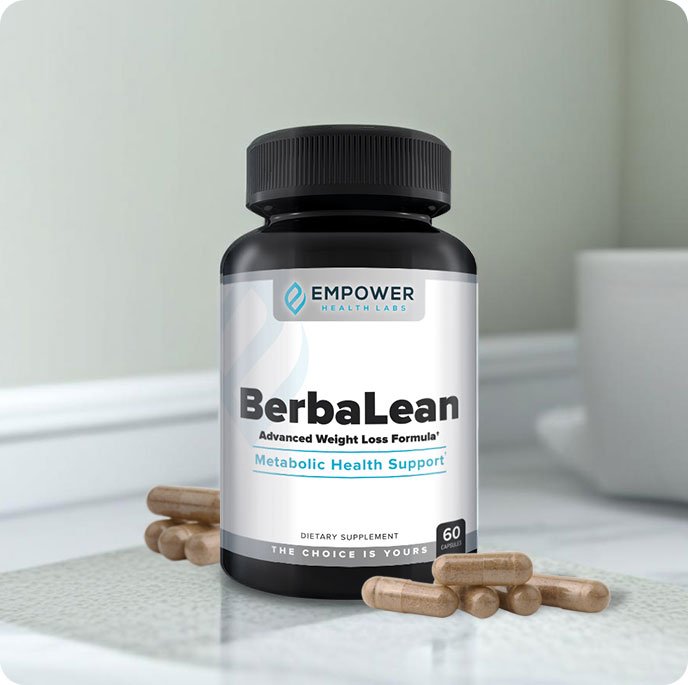
BerbaLean at a glance
A berberine-centered metabolic support formula positioned around cravings, appetite steadiness, blood sugar-related consistency, and helping healthy choices feel easier to maintain.
A closer look at what is inside BerbaLean
BerbaLean is built around a full-spectrum berberine blend, supported by Ceylon cinnamon bark extract, bitter melon extract, and gynostemma pentaphyllum extract.
What makes that worth noticing is not just the ingredient list itself.
It is the role each ingredient plays inside the overall logic of the formula.
That is important because one of the easiest ways to make a supplement sound more impressive is to pile extra ingredients onto the label.
But that is not the same thing as a formula being intentionally designed.
A coherent formula should make you feel like each ingredient was chosen to support the same larger objective.
In BerbaLean’s case, that larger objective appears to be:
supporting the metabolic conditions that may influence cravings, appetite steadiness, blood sugar-related consistency, and how manageable healthy eating feels day to day.
That is why the blend matters more than the headline.
Full-Spectrum Berberine Blend
Berberine is the center of the formula for a reason.
It is one of the most talked-about ingredients in this space because of its relevance to:
- metabolic health
- blood sugar support
- insulin sensitivity
- and, for some people, appetite or cravings-related support
The honest way to frame that is not:
“Berberine is magic.”
It is:
“Berberine is a meaningful metabolic-support ingredient that may help some people feel more stable, less snack-driven, and more in control of their eating patterns.”
That matters because it places the formula on a credible foundation.
It also explains why berberine has become the anchor ingredient in this kind of conversation.
Not because it promises fantasy.
Because it appears relevant to the exact places where this buyer feels friction:
- after meals
- around cravings
- around appetite
- and around the struggle to stay consistent
So berberine is not just “the trendy thing” in this formula.
It is the ingredient that gives the formula its core metabolic-support identity.
Ceylon Cinnamon Bark Extract
Ceylon cinnamon is one of the ingredients that helps make this formula feel more intentionally built rather than randomly assembled.
Why?
Because when people talk about cravings, appetite swings, energy dips, and post-meal instability, those experiences often live inside the same broader conversation as blood sugar balance.
That is why cinnamon repeatedly shows up in metabolic-support formulas.
Not because it makes the label look more exciting.
Because it fits the same core objective.
In this context, cinnamon helps reinforce that BerbaLean is not trying to be a generic “weight loss” stack.
It is trying to be a formula built around:
- how appetite behaves
- how eating feels after meals
- how cravings may build
- and how manageable healthy choices feel across the day
That makes the formula feel more coherent.
And coherence matters.
Because a product like this becomes more persuasive when the buyer can see that it was built around one integrated problem pattern, not just a collection of popular ingredients.
Bitter Melon Extract
Bitter melon fits the same larger logic.
It is not there as a flashy add-on meant to make the formula look busier.
It belongs in the blend because it supports the same broader metabolic-support direction the formula is built around.
That matters.
Because one of the easiest ways to spot a weak supplement is when the ingredients feel like they were chosen for label appeal rather than formula logic.
BerbaLean works better conceptually because bitter melon does not feel random.
It reinforces the same overall pattern the formula is targeting:
- appetite-related friction
- post-meal steadiness
- blood sugar-related consistency
- and the internal resistance that can make healthy eating harder to sustain
That is the difference between a formula that looks impressive on paper and one that feels like it was built with an actual buyer problem in mind.
Gynostemma Pentaphyllum Extract
Gynostemma helps round out that same pattern.
Again, the key point is not to turn this into a science lecture.
The key point is to understand why this ingredient belongs here alongside berberine, cinnamon, and bitter melon.
It strengthens the identity of the formula as something built around:
- metabolic steadiness
- appetite-related support
- better consistency
- and a calmer, more manageable day-to-day eating experience
That matters because the buyer you are writing to is not looking for a random ingredient stack.
They are looking for signs that the product was built around a coherent hypothesis:
that the struggle they feel may be connected to appetite, cravings, post-meal patterns, and metabolic friction — and that a formula should be designed accordingly.
That is what makes the BerbaLean blend feel more intentional than a basic berberine bottle or a generic “metabolism” formula.
See whether BerbaLean feels built for the struggle you’re actually dealing with
If you want to look at the formula, ingredients, and product details more closely, you can review the full BerbaLean page here.
The real appeal of BerbaLean is not “faster weight loss”
Yes, a lot of people reading this care about weight.
Of course they do.
But if we are being honest, the deeper emotional appeal is not simply:
“I want to weigh less.”
It is more like:
- “I want to stop feeling pulled around by food.”
- “I want my appetite to feel calmer.”
- “I want fewer cravings.”
- “I want to stop undoing my progress.”
- “I want healthy choices to feel easier.”
- “I want to feel more normal around eating again.”
That is the emotional center of this offer.
And that is exactly why BerbaLean becomes more interesting when it is positioned as a support tool for consistency, not as some unbelievable transformation shortcut.
Because the truth is:
For the right person, one of the most meaningful changes is not always dramatic.
Sometimes it starts smaller.
Sometimes it sounds more like:
- “I wasn’t thinking about snacks all day.”
- “I felt fuller faster.”
- “Late-night cravings felt less intense.”
- “I felt more stable after meals.”
- “Sticking to my plan felt less exhausting.”
Those shifts may not sound flashy.
But to the person living with this struggle, they can feel huge.
Because those are the kinds of shifts that make long-term progress more possible.
And that is where BerbaLean gains its real persuasive power: not by promising a fantasy outcome, but by sounding like a product built to support the exact internal experience this buyer wants relief from.
“But I’ve already tried supplements before…”
That is one of the most important objections in this category.
And it is a fair one.
A lot of people have tried:
- weight-loss products
- appetite suppressants
- metabolism formulas
- blood sugar support supplements
- trendy ingredients that sounded promising at first
And many of them came away with the same reaction:
“It sounded good… but I didn’t really feel much.”
That is exactly why BerbaLean should not be approached like a miracle promise.
The right mindset is not:
“This has to be the one product that changes my life instantly.”
The better question is:
“Is this a more credible, better-matched formula for the specific pattern I’ve been dealing with?”
That is a much smarter standard.
Because this prospect does not need perfection.
They need:
- a believable explanation
- a formula that feels aligned
- a product that seems intentionally built
- and a next step that feels reasonable to test
That is where BerbaLean becomes easier to say yes to.
Not because it asks the buyer to suspend disbelief.
Because it asks for something much smaller and much more realistic:
“If this formula seems built around the exact frustration I’ve been dealing with, is it worth trying as a next step?”
That is a much lower-resistance decision.
And for this market, that matters.
“What if I’m worried about side effects?”
Another fair question.
Especially because people researching berberine often run into mixed experiences.
Some people are enthusiastic.
Others mention stomach discomfort or tolerability issues.
That is exactly why honest positioning matters.
No thoughtful person wants to be told:
“Zero issues. Zero downside. Guaranteed perfect experience.”
That kind of language lowers trust immediately.
The more credible message is:
Any supplement can affect different people differently.
That is why the smart move is always to:
- read the label carefully
- pay attention to how your body responds
- and talk with a qualified healthcare professional if you take medication, have a medical condition, or have specific concerns
For this audience, that kind of honesty does not weaken the sale.
It strengthens it.
Because it signals that BerbaLean is being presented like a realistic option — not a fantasy solution.
And for a skeptical, research-minded buyer, that kind of restraint is often what makes the product feel safer to explore in the first place.
“How do I know BerbaLean is different from generic berberine?”
This is probably the most commercially important question.
Because once someone believes berberine is genuinely interesting, the next question becomes:
Why this one?
And the best answer is not:
“Because it sounds more exciting.”
It is:
Because it is positioned around the exact cluster of issues the prospect actually cares about.
Not just “weight.”
Not just “metabolism.”
But:
- cravings
- appetite steadiness
- blood sugar support
- and making healthy choices feel easier to stick with
That distinction matters.
Because generic berberine says:
“Here is the ingredient.”
BerbaLean is trying to say:
“Here is a formula built around the broader metabolic pattern that may be making healthy eating feel harder than it should.”
That is a more complete answer to the buyer’s problem.
It also means the product feels less like a commodity.
And that is crucial.
Because once the reader understands the actual problem…
And once they see why the issue may be broader than calories alone…
Then BerbaLean no longer feels like:
“Here is another supplement.”
It starts to feel more like:
“Here is a formula that was built around the kind of struggle I’ve been trying to solve.”
That is a much stronger buying position.
Who BerbaLean may be a fit for
BerbaLean may be worth a closer look if you are someone who:
- struggles with cravings, especially sweets or late-night snacking
- feels like your appetite is louder than your intentions
- suspects blood sugar instability may be affecting your eating patterns
- wants metabolic support, not a stimulant-heavy fat burner
- prefers a more natural-feeling next step than jumping straight to something more extreme
- wants healthy eating to feel easier, not forced
- is open-minded, but skeptical enough to want a believable explanation
In other words: it may be a fit if you are not looking for hype, and you are looking for a more sensible kind of support.
What to expect — realistically
This part matters.
Because how a product is framed determines the quality of buyer it attracts.
If someone believes BerbaLean is supposed to do something outrageous, they are being set up for the wrong experience.
A more realistic expectation is this:
BerbaLean may be worth trying if your goal is to support:
- appetite steadiness
- cravings control
- blood sugar-related consistency
- and a calmer, easier relationship with healthy eating
For some people, that may show up as:
- less mental chatter around food
- less intense cravings
- feeling fuller sooner
- less urge to snack constantly
- feeling like healthy choices take less effort
That is a much more believable entry point.
And ironically, it is often the kind of shift that matters most.
Because when healthy eating feels easier, progress usually stops feeling so fragile.
That is the kind of outcome this advertorial has been preparing the reader to value: not fantasy transformation… but a more manageable daily experience that gives real progress a better chance to happen.
What realistic progress may feel like
- less food chatter
- less intense cravings
- steadier appetite
- healthier choices feeling easier to maintain
The strongest reason to consider BerbaLean
At the end of the day, the strongest case for BerbaLean is not:
“This is the most dramatic product in the category.”
It is:
This may be a more thoughtful, better-matched next step for someone whose real struggle is cravings, appetite instability, food noise, and metabolic friction.
That is the offer.
Not magic.
Not fantasy.
Not “same as injections.”
Just a more believable path for the right person.
And if that sounds closer to your experience than another loud weight-loss promise…
then BerbaLean may be worth looking at more closely.
See whether BerbaLean feels like the right fit for you
If what you have read here feels more like your real experience than the usual supplement promises, and you want to see whether the formula, ingredients, and overall positioning of BerbaLean feel aligned with what you have been researching…
There, you can look at the full product details, the ingredients inside the formula, how the offer works, and whether it feels like a reasonable next step for your situation.